Thursday, February 22, 2007

What is Death?


On Death
The Self, having in dreams enjoyed the pleasures of sense, gone hither and thither, experienced good and evil, hastens back to the state of waking from which he started.

As a man passes from dream to wakefulness, so does he pass from this life to the next.

When a man is about to die, the subtle body, mounted by the intelligent self, groans--as a heavily laden cart groans under its burden.

When his body becomes thin through old age or disease, the dying man separates himself from his limbs, even as a mango or a fig or a banyan fruit separates itself from its stalk, and by the same way that he came he hastens to his new abode, and there assumes another body, in which to begin a new life.

When his body grows weak and he becomes apparently unconscious, the dying man gathers his senses about him and, completely withdrawing their powers, descends into his heart. No more does he see form or color without.

He neither sees, nor smells, nor tastes. He does not speak, he does not hear. He does not think, he does not know. For all the organs, detaching themselves from his physical body, unite with his subtle body. Then the point of his heart, where the nerves join, is lighted by the light of the Self, and by that light he departs either through the eye, or through the gate of the skull, or through some other aperture of the body. When he thus departs, life departs; and when life departs, all the functions of the vital principle depart. The Self remains conscious, and, conscious, the dying man goes to his abode. The deeds of this life, and the impressions they leave behind, follow him.

As a caterpillar, having reached the end of a blade of grass, takes hold of another blade and draws itself to it, so the Self, having left behind it [a body] unconscious, takes hold of another body and draws himself to it.

As a goldsmith, taking an old gold ornament, molds it into another, newer and more beautiful, so the Self, having given up the body and left it unconscious, takes on a new and better form, either that of the Fathers, or that of the Celestial Singers, or that of the gods, or that of other beings, heavenly or earthly.


Brihadaranyaka Upanishad 4.3.34-4.4.4

On Why Arjuna should Fight

About why Arjuna should fight

The demonic do things they should avoid and avoid the things they should do. They have no sense of uprightness, purity, or truth.

"There is no God," they say, "no truth, no spiritual law, no moral order. The basis of life is sex; what else can it be?" Holding such distorted views, possessing scant discrimination, they become enemies of the world, causing suffering and destruction.

Hypocritical, proud, and arrogant, living in delusion and clinging to deluded ideas, insatiable in their desires, they pursue their unclean ends. Although burdened with fears that end only with death, they still maintain with complete assurance, "Gratification of lust is the highest that life can offer."

Bound on all sides by scheming and anxiety, driven by anger and greed, they amass by any means they can a hoard of money for the satisfaction of their cravings.

"I got this today," they say; "tomorrow I shall get that. This wealth is mine, and that will be mine too. I have destroyed my enemies. I shall destroy others too! Am I not like God? I enjoy what I want. I am successful. I am powerful. I am happy. I am rich and well-born. Who is equal to me? I will perform sacrifices and give gifts, and rejoice in my own generosity." This is how they go on, deluded by ignorance. Bound by their greed and entangled in a web of delusion, whirled about by a fragmented mind, they fall into a dark hell.

One man believes he is the slayer, another believes he is the slain. Both are ignorant; there is neither slayer nor slain. You were never born; you will never die. You have never changed; you can never change. Unborn, eternal, immutable, immemorial, you do not die when the body dies. Realizing that which is indestructible, eternal, unborn, and unchanging, how can you slay or cause another to be slain?

As a man abandons his worn-out clothes and acquires new ones, so when the body is worn out a new one is acquired by the Self, who lives within.

The Self cannot be pierced with weapons or burned with fire; water cannot wet it, nor can the wind dry it. The Self cannot be pierced or burned, made wet or dry. It is everlasting and infinite, standing on the motionless foundation of eternity. The Self is unmanifested, beyond all thought, beyond all change. Knowing this, you should not grieve.

Bhagavad Gita 16.7-16

Basava Vachana


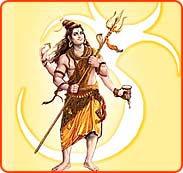
"When the ghosts read the writing on the skulls Shiva wears
around his neck, they know, 'This one is Brahma, this one is
Vishnu, this one is Indra, this is death,' as they play happily
with them, Shiva smiles, he laughs, our god

--Basava, vacana no.537 translated in A.K. Ramanujan.

The Goal of Life?

To many it is not given to hear of the Self. Many, though they hear of
it, do not understand it. Wonderful is he who speaks of it. Intelligent
is he who learns of it. Blessed is he who, taught by a good teacher, is
able to understand it.

The truth of the Self cannot be fully understood when taught by an
ignorant man, for opinions regarding it, not founded in knowledge, vary
one from another. Subtler than the subtlest is this Self, and beyond all
logic. Taught by a teacher who knows the Self and Brahman as one, a man
leaves vain theory behind and attains to truth.

The awakening which you have known does not come through the intellect,
but rather, in fullest measure, from the lips of the wise....

Words cannot reveal him. Mind cannot reach him. Eyes do not see him.
How then can he be comprehended, save when taught by those seers who
indeed have known him?

Bright but hidden, the Self dwells in the heart.
Everything that moves, breathes, opens, and closes
Lives in the Self. He is the source of love
And may be known through love but not through thought.
He is the goal of life. Attain this goal!

The shining Self dwells hidden in the heart.
Everything in the cosmos, great and small,
Lives in the Self. He is the source of life,
Truth beyond the transience of this world.
He is the goal of life. Attain this goal!

Mundaka Upanishad 2.2.1-2

Quotes from the Upanishads and the Gita

This is a Random collection of quotes. They are not necessarily in the right sequence. If you want to study the Upanishads or the Gita in their entirety, pl refer to sites dedicated to this. I have some links ion the left pane

Select a clean spot, neither too high nor too low, and seat yourself firmly on a cloth, a deerskin, and kusha grass. Then, once seated, strive to still your thoughts. Make your mind one-pointed in meditation, and your heart will be purified. Hold your body, head, and neck firmly in a straight line, and keep your eyes from wandering. With all fears dissolved in the peace of the Self and all desires dedicated to God, controlling the mind and fixing it on Me, sit in meditation with Me as your only goal. With senses and mind constantly controlled through meditation, united with
the Self within, an aspirant attains Nirvana, the state of abiding joy and peace in Me.

Arjuna, those who eat too much or eat too little, who sleep too much or sleep too little, will not succeed in meditation. But those who are temperate in eating and sleeping, work and recreation, will come to the end of sorrow through meditation. Through constant effort they learn to withdraw the mind from selfish cravings and absorb it in the Self. Thus they attain the state of union.

When meditation is mastered, the mind is unwavering like the flame of a lamp in a windless place. In the still mind, in the depths of meditation, the eternal Self reveals itself. Beholding the Self by means of the Self, an aspirant knows the joy and peace of complete fulfilment. Having at-
tained that abiding joy beyond the senses, revealed in the stilled mind, he never swerves from the central truth. He desires nothing else, and cannot be shaken by the heaviest burden of sorrow.

The practice of meditation frees one from all affliction. This is the path of yoga. Follow it with determination and sustained enthusiasm. Renouncing wholeheartedly all selfish desires and expectations, use your will to control the senses. Little by little, through patience and repeated effort, the mind will become stilled in the Self.

Wherever the mind wanders, restless and diffuse in its search for satisfaction without, lead it within; train it to rest in the Self. Abiding joy comes to those who still the mind. Freeing themselves from the taint of self-will, with their consciousness unified, they become one with God.

This is true knowledge: to seek the Self as the true end of wisdom always. To seek anything else is ignorance.

Few see through the veil of maya.

Arjuna: Tell me of those who live established in wisdom, ever aware of the Self, O Krishna. How do they talk? How sit? How move about?

Lord Krishna: They live in wisdom who see themselves in all and all in them, who have renounced every selfish desire and sense craving tormenting the heart.

Neither agitated by grief nor hankering after pleasure, they live free from lust and fear and anger. Established in meditation, they are truly wise. Fettered no more by selfish attachments, they are neither elated by good fortune nor depressed by bad. Such are the seers.

Even as a tortoise draws in its limbs, the wise can draw in their senses at will. Aspirants abstain from sense pleasures, but they still crave for them. These cravings all disappear when they see the highest goal. Even of those who tread the path, the stormy senses can sweep off the mind. They live in wisdom who subdue their senses and keep their minds ever absorbed in Me.

Bhagavad Gita 6.10-27

In a clean, level spot, free from pebbles, fire, and gravel, By the sound of water and other propinquities Favorable to thought, not offensive to the eye, In a hidden retreat protected from the wind, one should practice yoga.

Svetasvatara Upanishad 2.8-15

When all the senses are stilled, when the mind is at rest, when the intellect wavers not--then, say the wise, is reached the highest state.

This calm of the senses and the mind has been defined as yoga. He who attains it is freed from delusion.

Katha Upanishad 2.6.10-11

Within the lotus of the heart he dwells, where the nerves meet like the spokes of a wheel at its hub. Meditate on him as OM. Easily may you cross the sea of darkness.

Mundaka Upanishad 2.2.6

As one not knowing that a golden treasure lies buried beneath his feet may walk over it again and again, yet never find it, so all beings live every moment in the city of Brahman, yet never find him because of the veil of illusion by which he is concealed.

Chandogya Upanishad 8.3.2

See more at this site

Sunday, February 18, 2007

The Benefits Of Meditation At Work

Here is yet another article that talks about "Benefits of Meditation" at work

The needs of business environment are fast demanding some techniques that can be incorporated to cater to the mental needs of the employees and executives. Tension, anxiety, and fatigue are common phenomenon that almost all the corporate sector is complaining about.The competition and market demand does not allow them to be moderate in their work. They need to work like machines. This is actually where the problem lies, and meditation at work can easily have its impact. Meditating at work can prove almost to be a panacea for work environment problems.... (Read the rest of the article here)

The summary "Benefits" seems to be "Increase in productivity" and "Improvement in performance". My take on this is, firstly this sounds like you are describing a machine, secondly Yes, we all know one needs to enter the inner sanctum to be at peace, weather at work or not. The goal of meditation cannot be anything else but meditation itself. Its a state of being, its not doing. It doesn’t matter how, when, where the individual finds time and place for his 3 minutes of silent self awareness. The silence remains with him for the rest of the day.

You are describing meditation as something, which is not being done in the work place today. You seem to be proposing an idea, which benefits a business. You imply that some kind of "Meditation Program" should be implemented in the work place? if so what? How? it is very difficult if not impossible to implement any kind of meditation program in most western office buildings. These are nothing more than "small places to put the resources" a collection of cubicles. The worker is just another resource who is put with any other office resources like the computer, telephone, desk, waste bin, stapler, pencils etc. Where is the place? Also, Where is the time? when do you propose to do this? Will bosses accept people sitting silently doing nothing, first thing in the morning after they arrive? say from 9.00 - 10.00 AM?

Sorry my friend, you are talking about an impossible situation. You are talking about using the classic “Invest-Monitor-Correct” techniques to implement something very personal. Meditation has incredible benefits for the individual true. How you propose to implement the solution seems to be by encouraging managers and business owners to "Invest" in another employee benefit and monitor if revenue and margins do improve. This will not work. The capital benefit has to go back to the individual for him to get motivated to perform any better than he already is.

The stress, strain, fatigue you describe are direct results of capitalism. We have accepted that we want to perform at higher levels, build better machines and deliver better products and services faster and cheaper. We are willing to work hard to achieve these because We want to get rich faster. We have setup performance based incentives for the employee in the hope that he will aim to perform better. We are the ones who want this situation. To keep up with our competition which could be from a different company, a different department, a different section of the same department or just the person in your next cubicle. We want to keep running; the race gets faster every minute so you have to run faster to remain where you are.
Yes, meditation will help up to a limit, like a psychotropic drug, to desensitize the mind. The limit in this case is purely physical. Once this limit is reached, the mind-body breaks down. The individual cannot perform any better. By insisting in staying in the rat race, you can only push this limit a bit higher and delay it a bit longer through meditation.

I feel, the whole premise for this discussion is wrong. Meditation cannot be misused as a tool to achieve higher monetary gains in business. Once an individual gets the fragrance of Meditation the whole structure of the societal rat race will seem irrelevant. You might end up completely losing an individual from the rat race!

Saturday, February 17, 2007

OSHO: Indias Greatest Bookman?

If there were a competition to decide who is the 20th century's a) most voracious reader; b) most prolific author; and c) assembler of the largest personal library, India would have a candidate. His name is Osho, a spiritual leader, who attained, before his death in 1990, a substantial following both in India and the West. India's esteem for Osho can be measured by the fact that he is one of only two authors whose entire works have been placed in the Library of India's National Parliament in New Delhi. The other is Mahatma Gandhi.

From 1958 to 1966, Osho was Professor of Philosophy at the University of Jabalpur. Thereafter, he devoted himself entirely to spiritual study, reading close to 100 books a week. He is said to have read 100-200.000 titles over a period of forty years, some fiction, but mostly philosophy, psychology, religion and science.

In Books I have loved (1985), a book dedicated to the memory of Alan Watts and his effort to bridge the gap between Eastern and Western thinking and spirituality, Osho cites authors as diverse as Walt Whitman, Lewis Carroll, Friedrich Nietzsche, Fyodor Dostoyevsky, The Book of Mirdad, Lao Tzu, Hahlil Gibran, D R Susuki, Herman Hess, Jean Paul Sartre, Martin Heidegger, Ludwig Wittgenstein, Samuel Beckett, Karl Marx, Turgenev, Herbert Marcuse and Aristotle.

In 1954, at the age of twenty-three, he spent his entire salary for a month (seventy rupees) on a copy of P D Ouspensky's Tertium Organum. He had a particular passion for 19th century Russian novelists and maintained that if he had to count only ten outstanding novels, five of them would be Russian. Osho first came to the attention of students from the West during his stay in Bombay from 1970 to 1974. Thereafter he settled in Poona, on the edge of the Deccan plateau, 120 miles from Bombay. His mansion, known as Lao Tzu House, is entirely filled with books. His private library of 100.000 volumes is said to be exceeded in the 20th century only by that of Henry Edwards Huntington, the American railway tycoon (1850-1927).

Read the rest of this fascinating article here

Echoes of Antiquity: Rediscovering the Ancient Indian Roots of Modern AI Ontologies

For many, the story of Artificial Intelligence (AI) and the formal structuring of knowledge (Ontology) begins in ancient Greece with Aristot...